

Orthopedics and Traumatology
In orthopedics and traumatology, platelet-rich plasma (PRP) can influence regenerative and reparative processes in various tissues of the musculoskeletal system through platelet-derived growth factors, including synovial tissue, capsular-ligament structures, bone, muscle, and cartilage.
Autologous PRP injections work primarily through the release of growth factors and bioactive proteins that can support cell proliferation, matrix synthesis, and the modulation of inflammatory processes. PRP can thus contribute to supporting the body’s own healing mechanisms.
In clinical practice, PRP is used as a complementary therapy and can be integrated into multimodal treatment concepts depending on the indication. The evidence varies depending on the indication and tissue type.
Injection Areas and Mechanism of Action
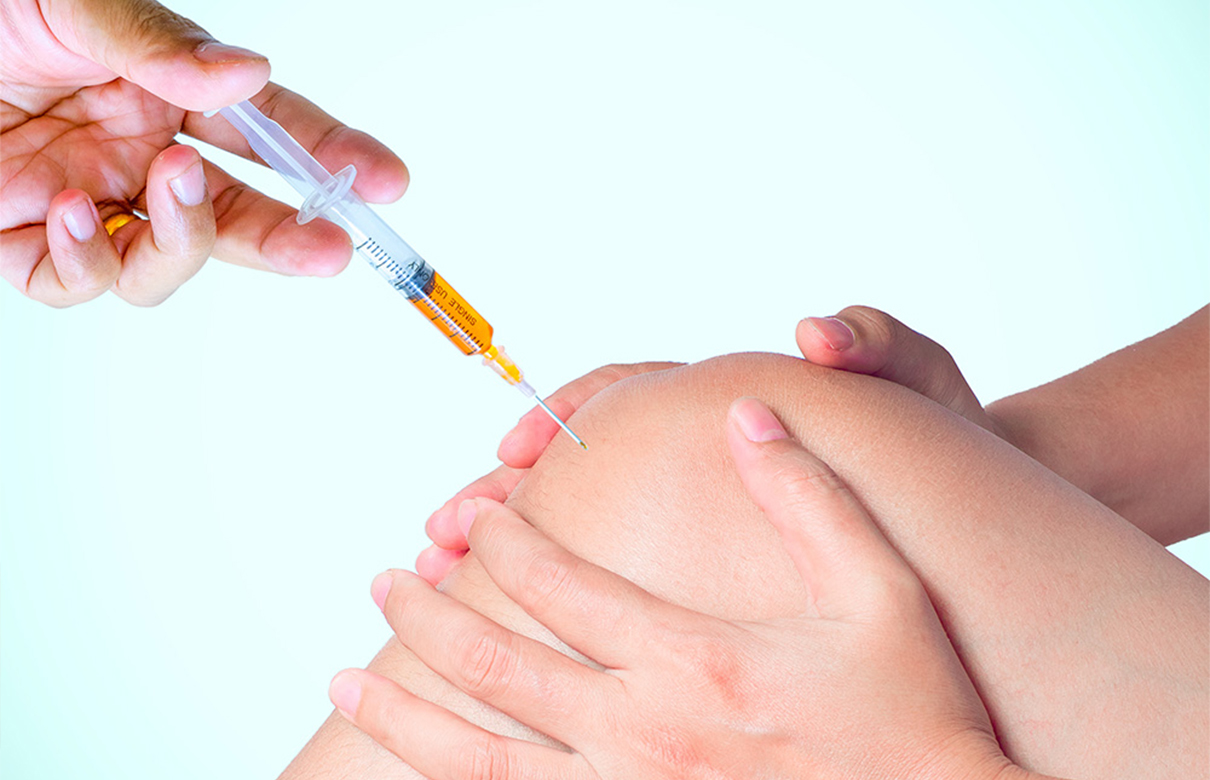
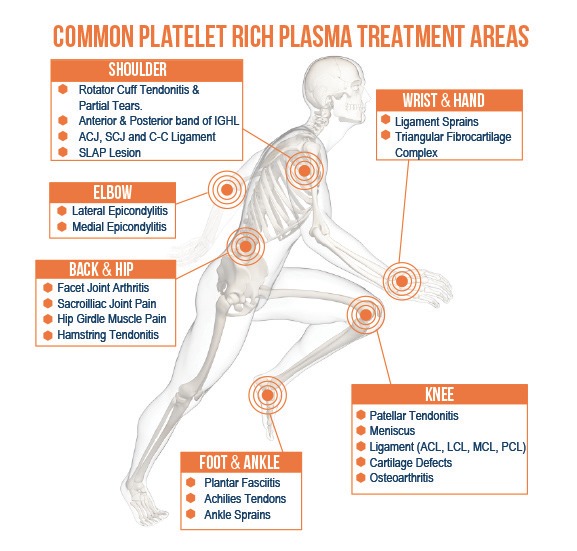
In orthopedics and traumatology, the Plasmabiotech method involves injecting platelet-rich plasma into joints, tendon and ligament structures, as well as periarticular soft tissues.
Autologous plasma injections help reduce inflammatory processes, alleviate pain, and restore joint mobility.
Autologous plasma injections contribute to reducing inflammatory processes, relieving pain, and restoring the range of motion of the joint.
| Affections | Results | Treatments |
|---|---|---|
| Arthrosis | Reduction of pain, restoration of synovial fluid, increased joint mobility, longer remission periods, reduces rehabilitation period after using prosthetics | Course of 2 – 8 procedures, with an interval of 7 – 14 days |
| Periarthritis | Rapid relief of pain, reduction of inflammation, increased joint mobility | Course of 2 – 6 procedures, with an interval of 7 – 14 days |
| Tendon and ligament tears and injuruies | Accelerated recovery of injured tissues, stronger musculoskeletal tissues | Course of 2 – 6 procedures, with an interval of 7 – 14 days |
| Acute injury of muscle and bone tissue | Stimulation of bone and cartilaginous tissue formation, shorter rehabilitation period after injuries and surgeries | Course of 4 – 8 procedures, with an interval of 7 – 14 days |
| Tendinopathies | Accelerated tissue regeneration, rapid pain relief, restoration of mobility in the extremities | Course of 3 – 8 procedures, with an interval of 7 – 14 days |
| Spinal osteochondrosis | Rapid pain relief, elimination of muscle spasms | Course of 3 – 8 procedures, with an interval of 7 – 14 days |
- Drug therapy (depending on indication)
- Physiotherapeutic measures
- Structured movement training and therapeutic exercises
- Manual therapy and massage techniques